> More than 450,000 people have delivered on Wolt to help achieve their personal and financial goals.
> Flexible, digitally enabled platform work is a valuable addition to today’s labor market, and demand for it is growing.
> As many countries are shaping the rules for platform work, we want to bring transparency to the public discussion by addressing 10 frequently asked questions about Wolt couriers.
1. Are couriers Wolt employees?
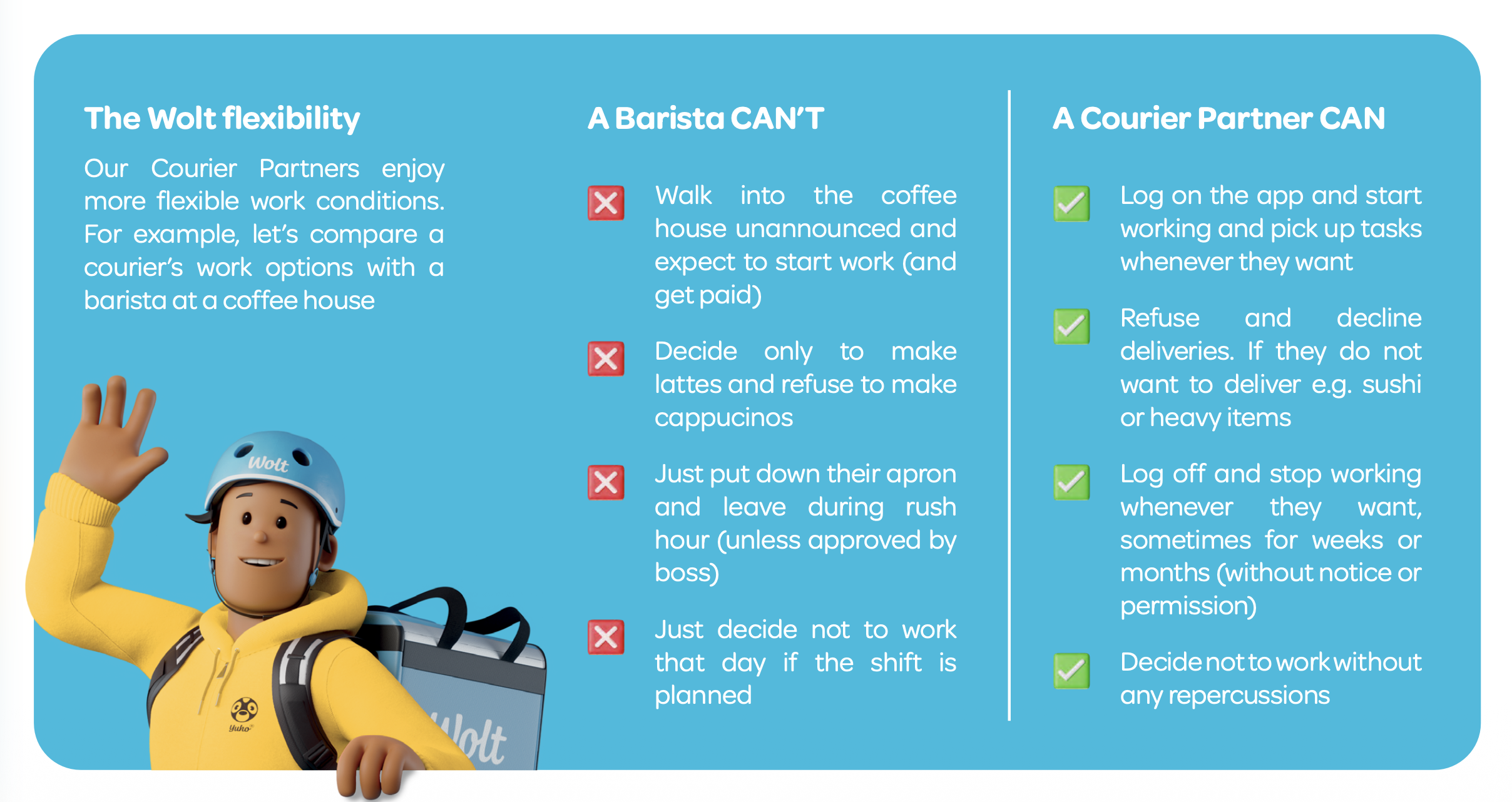
Mostly not. The vast majority of Wolt couriers are independent contractors who decide when, where, and for how long they deliver orders to consumers. They can also work other jobs or even deliver with other companies.
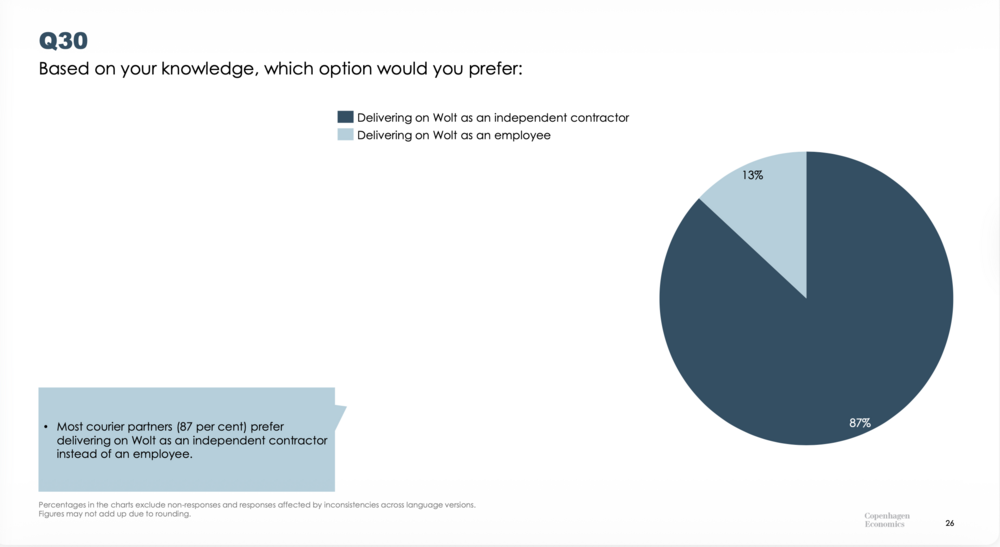
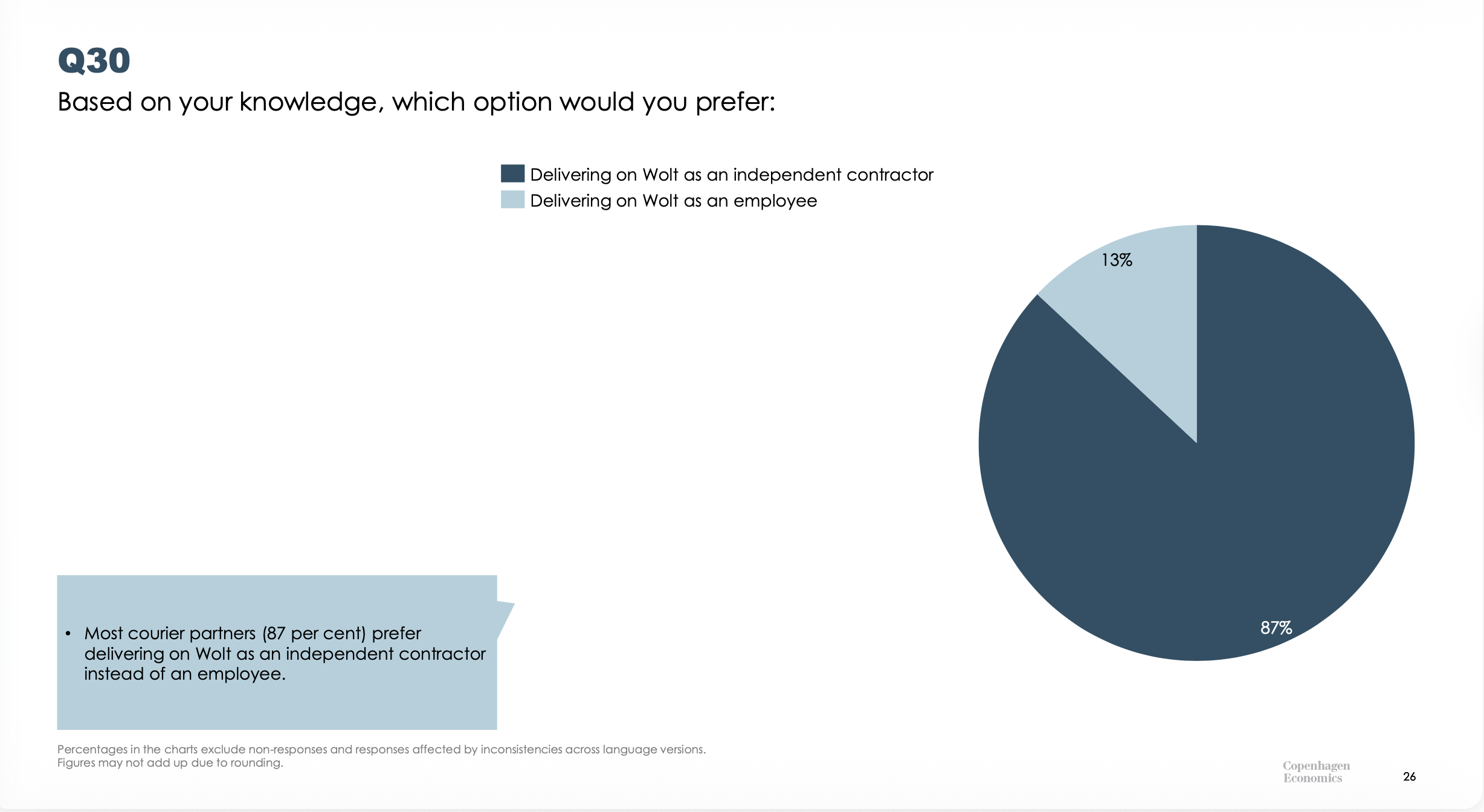
In 2024, the research firm Copenhagen Economics surveyed more than 20,000 Wolt couriers worldwide, and 87% stated that they preferred being independent contractors rather than employees. The main reason is that it allows them to fit deliveries around their own schedules, studies, or family life.
At the same time, the independent contractor model enables the service to run efficiently for both customers and merchants. Customers order most during lunch and dinner times, and since couriers can log in and out when they want, many come online when they anticipate the highest demand. That flexibility helps keep delivery times short for customers and creates more earning opportunities for couriers when demand for deliveries is high.
In some countries, Wolt also purchases delivery services from logistics companies that employ delivery workers. Additionally, in countries such as Germany, Finland, and Norway, a proportion of couriers are directly employed by Wolt companies to meet local business and regulatory requirements. Still, for most couriers, independent contracting remains the preferred way to work with Wolt.
Looking ahead, the future of platform work should balance flexibility with protections. Clear and modern rules, such as those being developed under the EU Platform Work Directive, can help ensure that people who value independence can keep it while also benefiting from social protections and legal clarity. You can read more about this topic at question 10.
png
87% of courier partners globally prefer delivering on Wolt as an independent contractor. Source: Copenhagen Economics, 2024
2. Do most couriers work on a full-time basis?
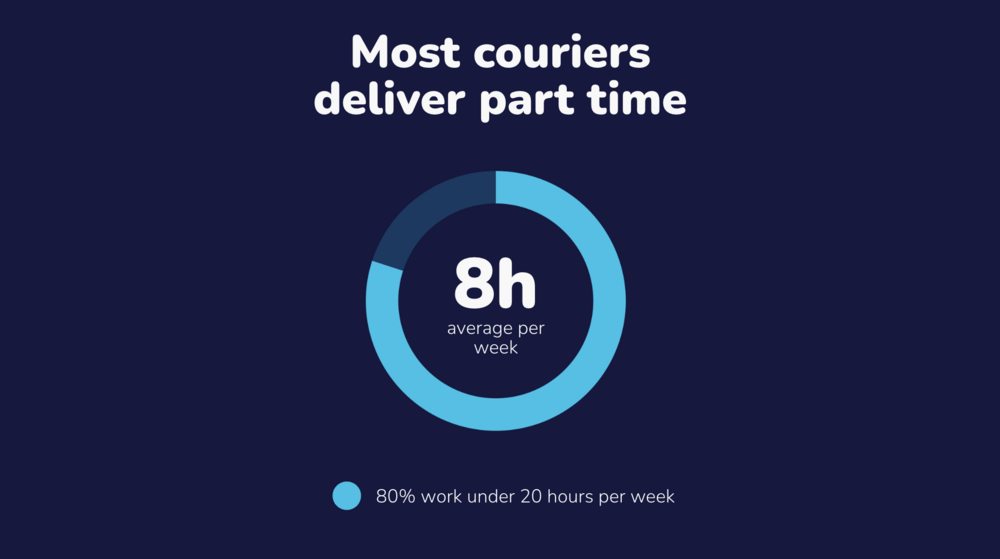
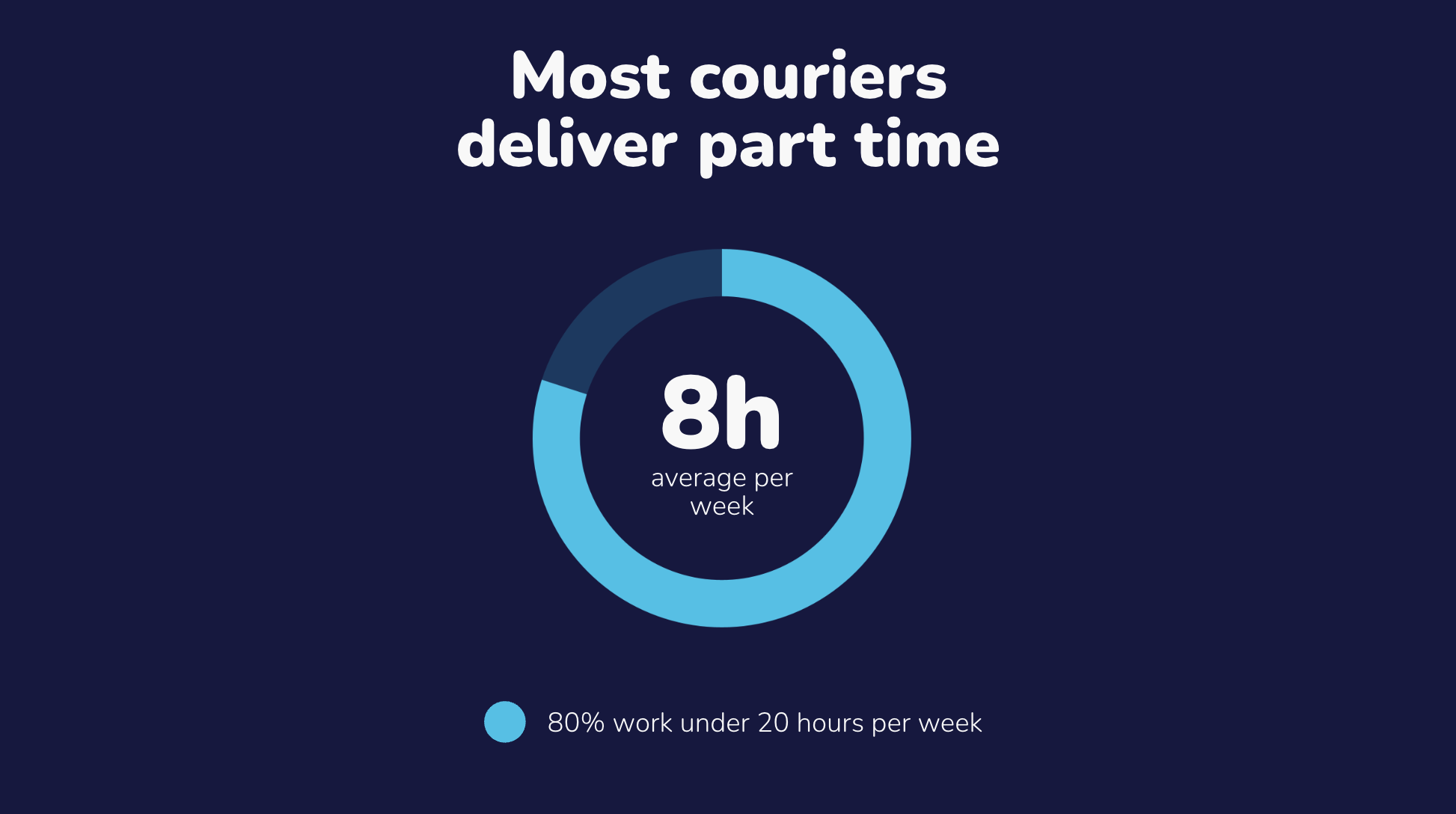
No. Most couriers use the Wolt platform as a source of supplementary income. In 2024, couriers delivered about 8 hours per week on average, and three out of four delivered fewer than 20 hours per week.
According to the Copenhagen Economics survey, 88% of couriers globally have full-time or part-time jobs, are studying, or have other responsibilities in addition to delivering on Wolt. Because demand peaks at lunch and dinner times, delivering on Wolt works best as a part-time, flexible opportunity — which is exactly how most couriers use it.
png
3. Would couriers prefer traditional employment if they could?
Surveys show that the vast majority would not, with a strong preference for independence. According to the study by Copenhagen Economics, 87% of couriers prefer delivering as independent contractors rather than as employees.
Independence allows them to choose when to log in and how much to work, without bosses, probation periods, or fixed shifts. 75% of those surveyed say Wolt offers flexibility they cannot find elsewhere.
png
4. Is delivering with Wolt low-paid work?
Courier work is a flexible way to earn additional income on your own terms. Courier partners invoice Wolt for the deliveries they complete and can freely choose which tasks to accept or decline. Typically, the delivery fee that customers pay does not cover the entire fee the courier charges.
On average in 2024, Wolt courier partners across 20 European countries earned around 235% of the national minimum wage or equivalent for each hour spent delivering orders.
Wolt is committed to offering competitive earning opportunities. That’s why our pricing model is designed so that delivery fees reflect the effort required for each task. If it didn’t, couriers would likely simply reject the task.
When surveyed by Copenhagen Economics, 65% of couriers said delivering on Wolt makes them feel more financially stable. Another 65% said they would have to cut their spending if flexible work were not available. For most, the unique flexibility — being able to choose when, where, and how much to deliver — is the main reason they partner with Wolt.
png
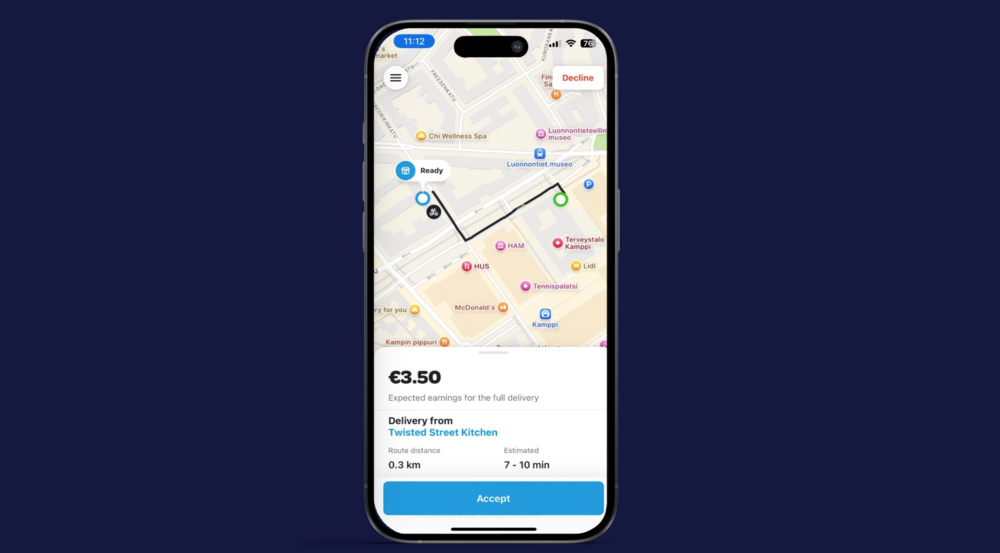
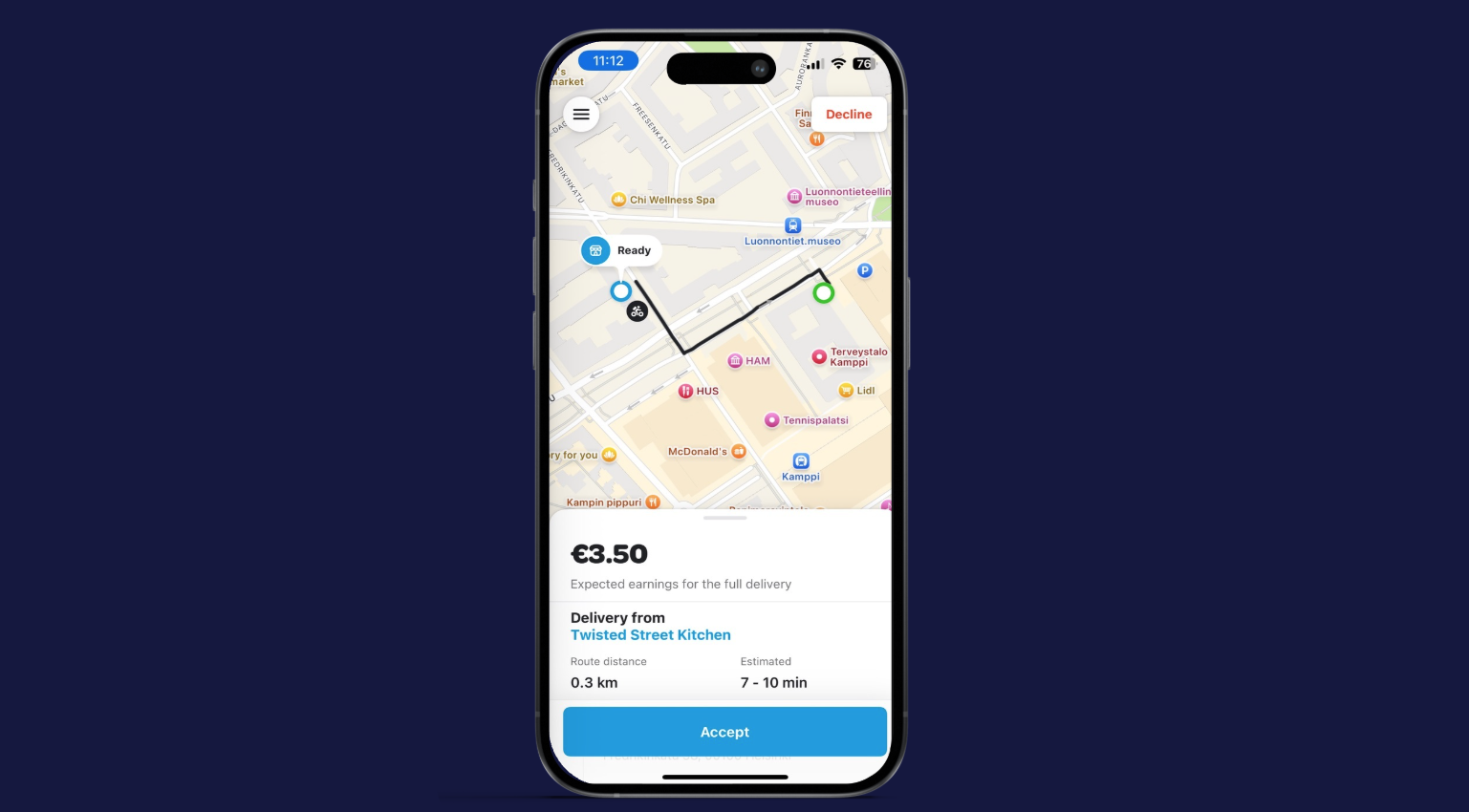
Screenshot of a task offer on the Wolt Partner App
5. Do algorithms favor some couriers over others?
No. Wolt’s task allocation system is designed to treat all couriers equally based on objective criteria. The algorithm assigns tasks based on objective factors such as:
Availability: Is the courier online and ready to deliver?
Location: How close are they to the pick-up point?
Vehicle type (bike, car, or scooter) affects delivery time.
Special capabilities: for example, relevant capabilities for handling cash or pharmacy orders.
Couriers always see key details of the delivery offer before deciding whether to accept or reject it, including pick-up and drop-off locations, estimated time, distance, and fee. We also publish an Algorithmic Transparency Report every year, which has been recognized as a best practice in the industry.
png
Read the latest Algorithmic Transparency report here.
6. Are couriers unhappy with their partnership with Wolt?
No. Satisfaction is consistently high: in our weekly in-app surveys, couriers rate Wolt 4.6 out of 5 globally, and 91% say they are satisfied with the partnership.
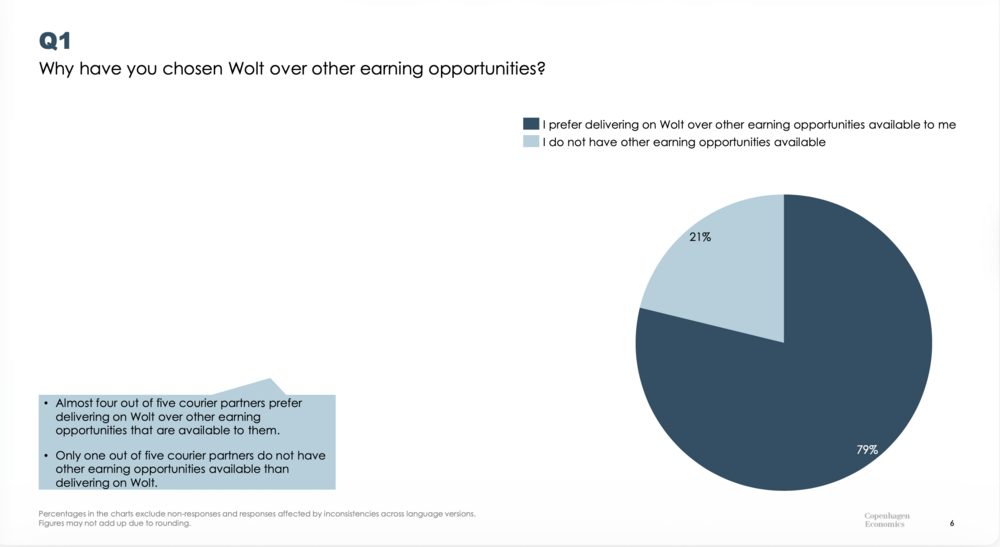
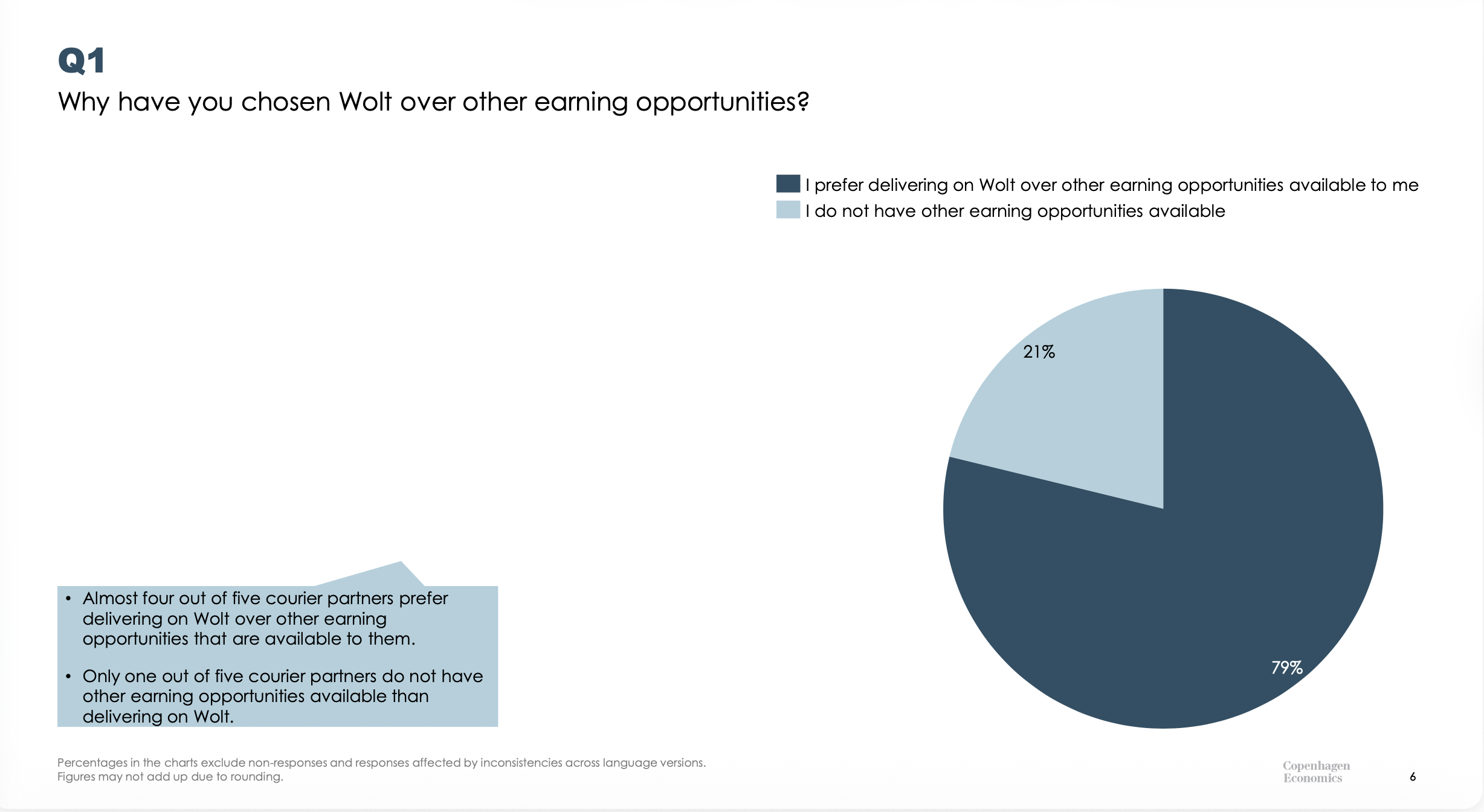
In the survey by Copenhagen Economics, 79% say they prefer delivering with Wolt over other earning opportunities available to them. Over 150,000 people are on the waiting list to become Wolt courier partners globally, underscoring the rising demand for flexible work.
As with any service, we understand that partnering with Wolt may not fit everyone’s needs. Delivering on Wolt is not the best source of full-time income, as customer demand varies by time and season. In our in-app surveys, globally around 6% of couriers rate their satisfaction with Wolt at 1 or 2 out of 5. With over 260,000 active couriers globally, even 1% means thousands of people who don’t feel they're benefiting enough from partnering with Wolt - and that’s why we want to continuously improve.
We regularly collect feedback from all our partners, including courier partners, through surveys, in-app ratings, and meetings. In quarterly surveys, couriers consistently highlight three things they value most: the freedom to choose when and how much to work, positive interactions with customers, and fast, real-time support.
Partner feedback also informs how we develop the platform. For example, in 2025, we introduced City Heat Maps, which display real-time demand hotspots and Early Payouts, enabling couriers to access their earnings immediately after delivery. Both features were created in direct response to courier requests.
Estonian courier partner Ragnar shares his experience of delivering on Wolt.
7. Are couriers immigrants who cannot find other opportunities?
Couriers come from a wide range of backgrounds. In 2024, about two-thirds of couriers globally delivered in the country where they were born.
What unites them is choice: 79% of couriers say they choose Wolt because they prefer it over other opportunities. With no strict requirements for language, education, or minimum hours, the model lowers barriers and offers equal opportunities for people from all walks of life.
Anyone over 18 and with the required working permits is welcome to apply.
png
79% of courier partners globally prefer delivering on Wolt over other earning opportunities available to them. Source: Copenhagen Economics, 2024
8. Isn’t delivering unsafe?
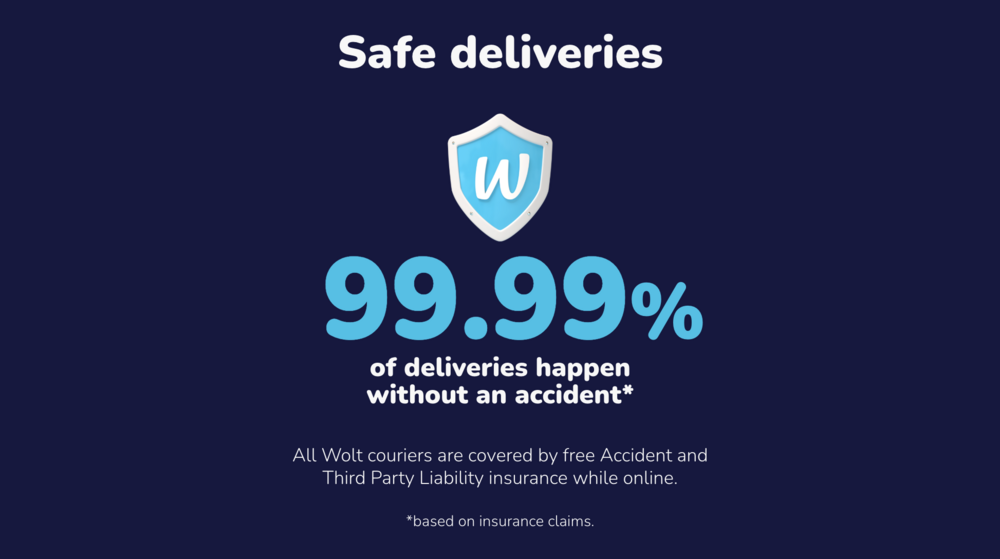
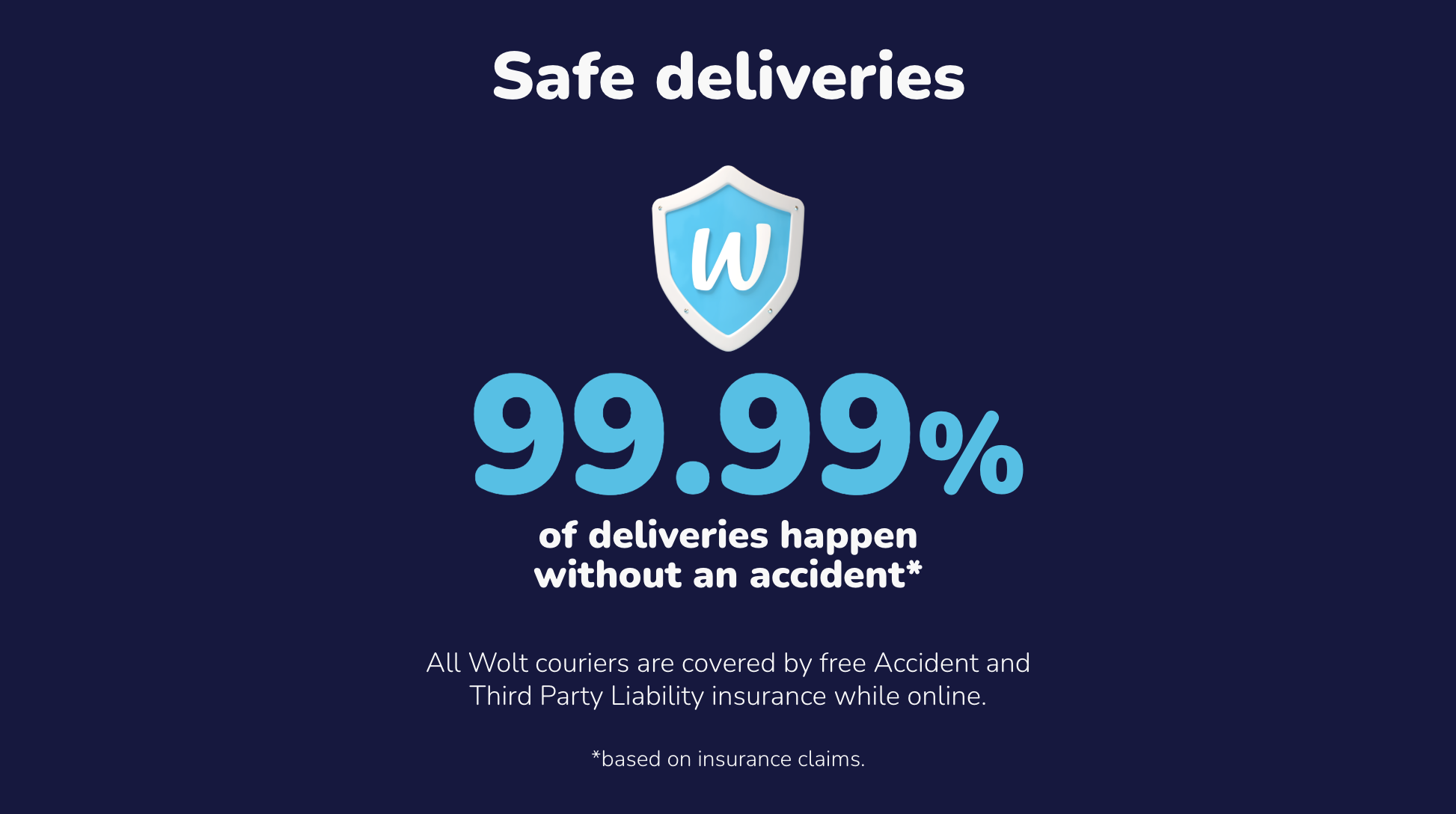
Safety is a central priority in Wolt's operations. In 2024, more than 99.99% of deliveries happened without accidents, based on insurance claims.
Couriers are covered by free insurance provided by Wolt while they are online and for 1 hour after logging off. In 2023, this program paid out more than €1.1 million to couriers and achieved a 92% satisfaction rate among users.
We continually invest in safety features, such as customer PIN codes, for deliveries of high-value or sensitive items, as well as facial recognition in the Wolt Partner App to prevent account takeovers or misuse.
We also have a Speak Up channel where customers, courier partners, merchants, and employees can report any issues or concerns confidentially. Speak Up is managed by People InTouch, an independent third-party, to ensure a low-barrier and anonymous way to raise concerns.
png
9. Do platforms avoid responsibility when something goes wrong?
No. Couriers are insured from their first delivery, and claims are usually resolved within a few days.
Beyond insurance, we continue to invest in safety and reliability. In 2024, we achieved 99.9% platform uptime, helping couriers deliver smoothly. We also collaborate with local authorities and partners across Europe, including a pan-European occupational health and safety study led by Sweden’s Karolinska Institutet.
If couriers ever need help, they can reach our human Support team directly in the app for quick answers from a real person.
10. Isn’t traditional employment the only kind of work that benefits people and economies?
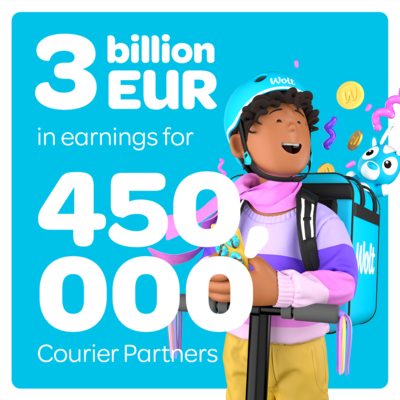
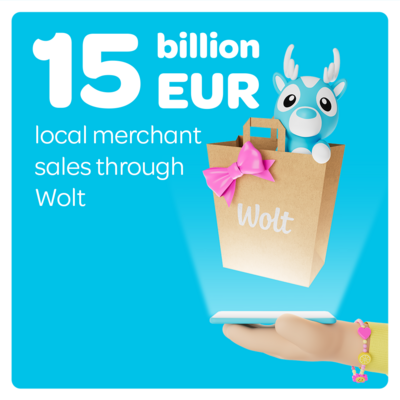
Platform work already generates billions in earnings, supports merchants, and strengthens local economies. Between 2014 and 2024, Wolt paid over €3 billion to 450,000 couriers, helped merchants generate €15 billion in sales, and supported a total of €19 billion in economic activity. Wolt couriers don’t only work in big cities, but also in small towns and villages, helping local stores and restaurants grow their sales and giving back time to busy customers.
Looking forward, our vision for platform work is simple:
Safeguard genuine independence by allowing couriers to work as independent contractors with full flexibility and control over their time and work.
Combine flexibility with protections like insurance and other safety nets.
Enhance transparency so that couriers, customers, merchants, and policymakers can clearly understand how the service works.
We believe platform work should combine the flexibility the courier partners value with the protections and benefits they deserve.
Whilst some believe platform workers should all be employees, and this would remedy any defects they perceive in platform work, this thinking fails to recognize how fundamentally different independent work is, and what would be lost in employment, not to mention the overwhelming preferences of the workers themselves.
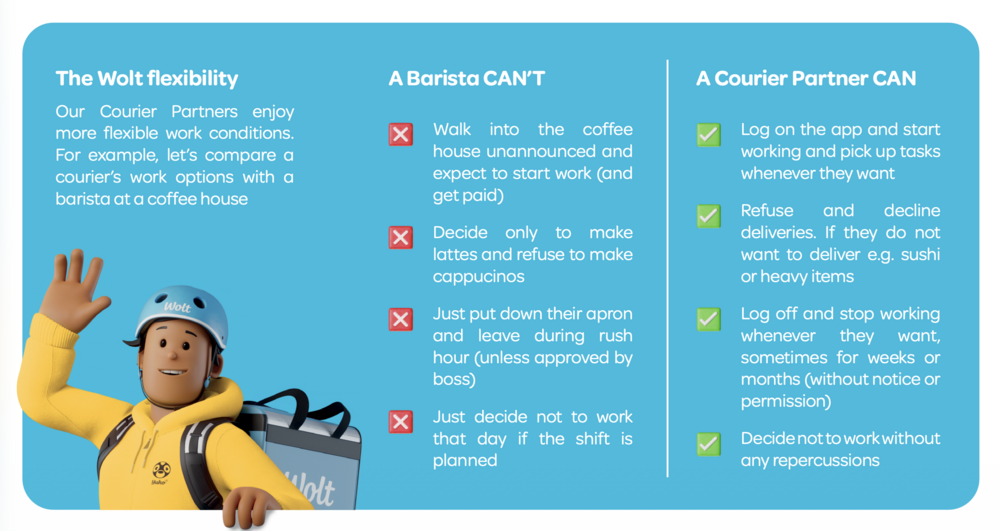
In employment models, employed couriers perform tasks assigned to them during dedicated work shifts and get hourly compensation in exchange for their commitment to work for those hours – and only the hours offered by the employer. Their performance is monitored and managed.
In Wolt’s self-employment model, couriers can come and go as they wish, and they get paid for the tasks they choose to accept. Wolt’s courier partners have shown their preference for flexibility and freedom, and that is why Wolt is focused on making flexible work even better.
png
png
png
As a fast-growing phenomenon, platform work raises questions — and deserves clear answers. By sharing data openly, we aim to add clarity and keep improving what matters most to couriers: flexibility, competitive earnings, and a safe, positive experience.
Flexible work is here to stay. Our goal is to keep making it safer, fairer, and more rewarding for everyone.
Wolt’s Community Standards outline how everyone on the platform—customers, merchants, courier partners, and Wolt teams—can contribute to a positive experience. They are built around four principles...
Wolt is no longer just a food delivery app. We’re evolving into something much bigger: a mall in your pocket and even beyond - a true digital window to your city.
We’re happy to share that Wolt has successfully renewed its ISO/IEC 27001 certification and achieved ISO/IEC 27701 certification for privacy information management.