


Why the next era of Sustainable Urban Mobility should be planned with last mile delivery platforms having a seat at the table.
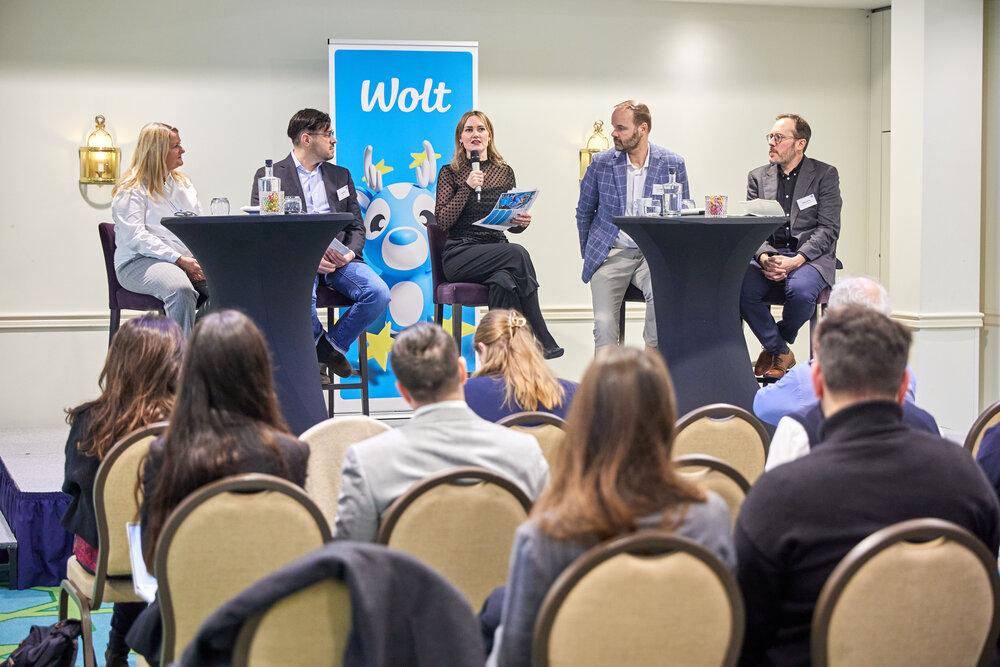
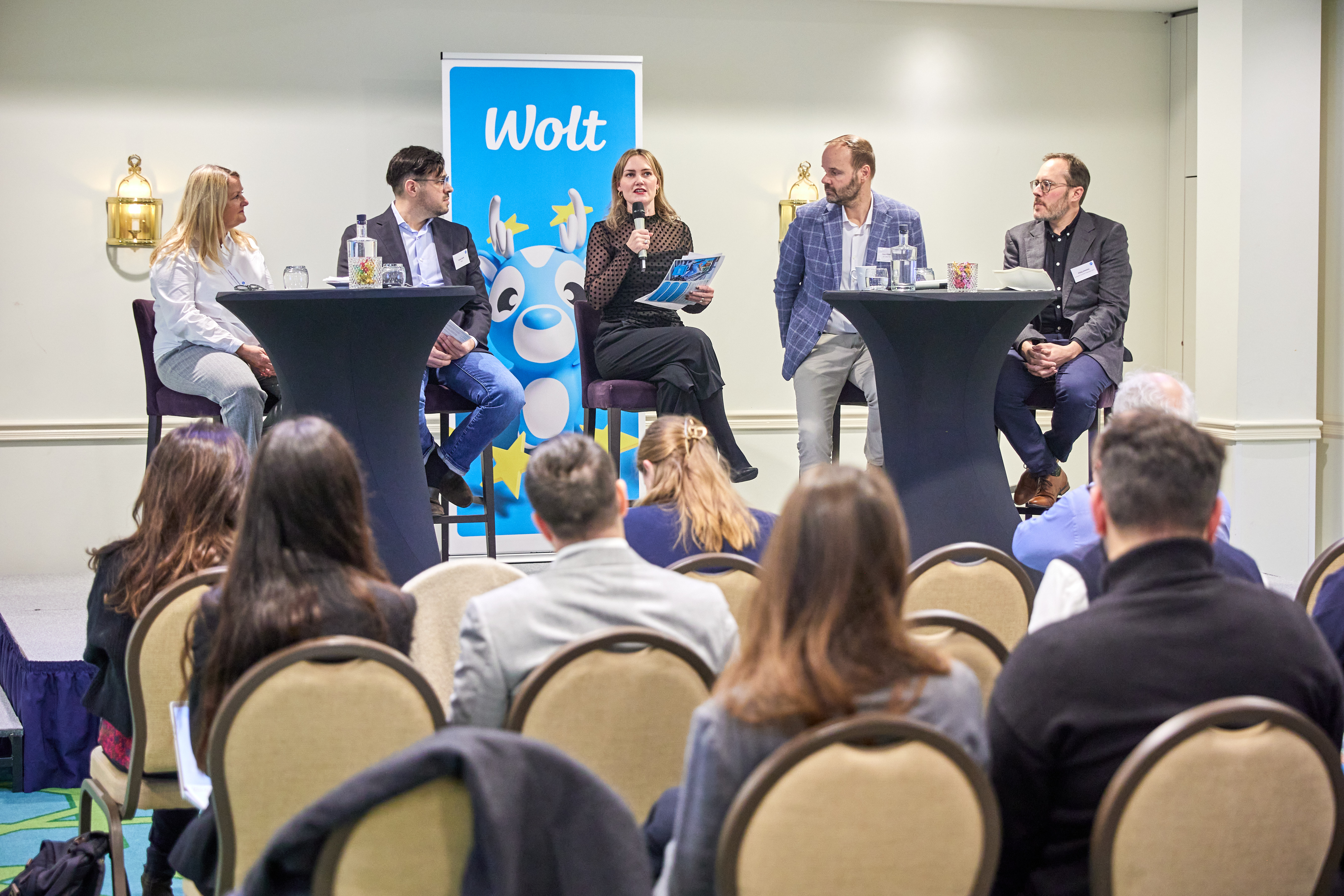
Panelists from left to right: Isabelle Vandoorne (European Commission), Jamie Saab (Wolt), Shona Murray (Euronews), Marc Rozendal (EIT Urban Mobility), Philip Amaral (European Cyclists’ Federation)
At Wolt, our mission is simple: make cities better places to live. That means supporting the thousands of small and medium-sized businesses that shape neighbourhoods, create local jobs, and give cities their identity. For many of the merchants working with Wolt, we are more than just a delivery app, with many saying platforms like Wolt are essential to their day-to-day operations.
For merchants to thrive on our platform, couriers to deliver safely, and customers to receive their orders on time, the digital infrastructure behind Wolt matters, but just as essential is the physical infrastructure of the cities we all move through.
In light of the recently published EU Agenda for Cities, which emphasises sustainable mobility, better planning tools, and stronger collaboration between public and private actors, we wanted to help policymakers and city leaders better understand what the next era of urban mobility looks like from the perspective of last-mile delivery. To support this conversation, we convened policymakers, mobility experts, and industry leaders for an in-depth discussion on the challenges ahead and the contribution platforms like Wolt can make to building cleaner, safer, and more people-centred cities.
Isabelle Vandoorne, acting Head of Innovation and Research at the European Commission (DG MOVE), opened the discussion by setting an important baseline: while big cities across Europe are now required by EU law to develop sustainable urban mobility plans, they often lack the capacity, skills, and tools to address all urban mobility issues they face.
This is especially true when it comes to working with innovative solution providers. “Cities have little capacity to engage with companies on data sharing,” she noted, despite data being essential for smart, efficient mobility planning.
This challenge is familiar to Wolt. Jamie Saab, Wolt’s Global Head of Sustainability, explained: “In discussions with cities, it’s often about data, but cities’ ability to access it and turn it into action is often limited.”
With thousands of couriers on the streets every day, Wolt generates valuable insights into where congestion builds up, where bike infrastructure is missing, and how delivery patterns evolve. This creates an opportunity for cities and companies to work together more closely. As Jamie put it, “Urban mobility hasn’t been looked at enough from a last-mile delivery perspective.”
A central aspect when adopting the perspective of companies like Wolt when it comes to urban mobility is the need to reimagine bike lanes: they are no longer simply commuter infrastructure, they are economic arteries that support the movement of people, goods, and local commerce.
Philip Amaral, Policy and Development Director at the European Cyclists’ Federation, further underlined the vastly untapped potential for bikes and bike lanes from an advocacy and industry perspective. He emphasised that e-cargo bikes can deliver up to 30 - 40% faster than cars in urban areas, making them a powerful tool for both decarbonisation and economic activity. But this only works if the infrastructure is there.
Yet most cities are still designed around car traffic. This prevents them from fully leveraging the speed, reliability, and sustainability benefits of bike-based logistics. Safe, connected bike infrastructure isn’t only good for cyclists, it drives economic activity, reduces congestion, and helps cities meet climate targets.
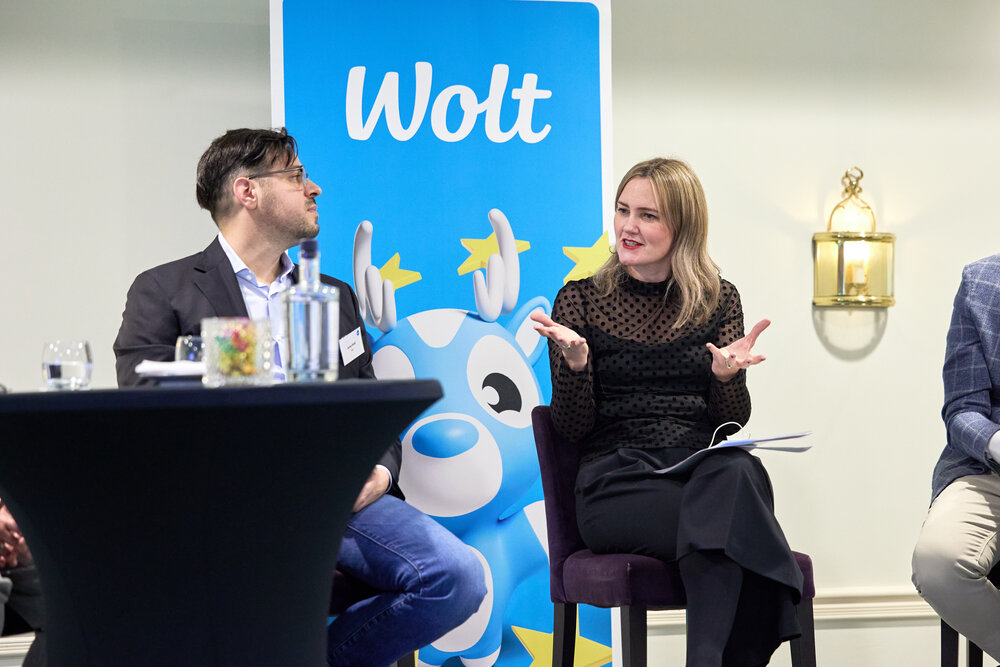
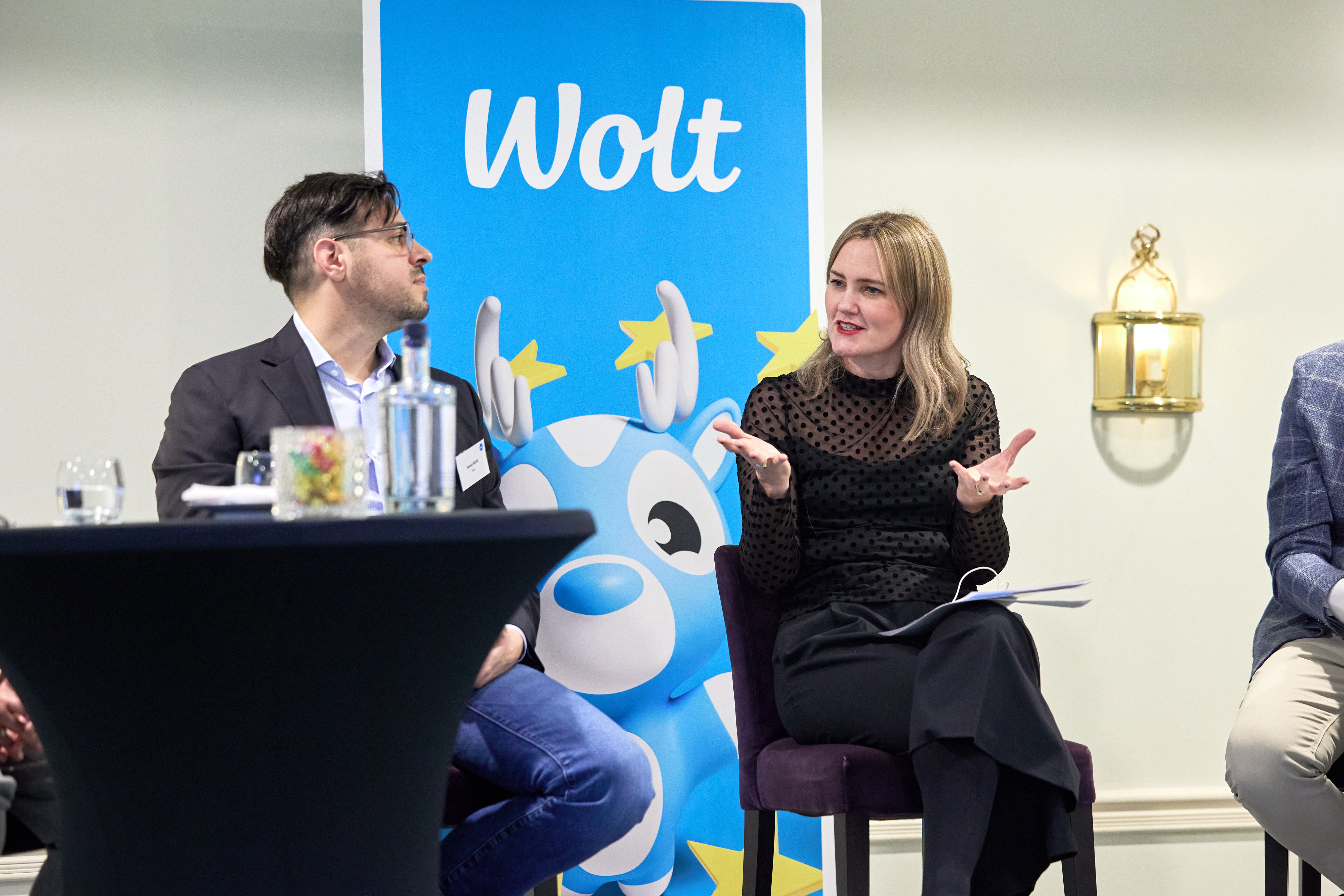
Bridging policy and industry perspectives, EIT Urban Mobility highlighted a challenge that often goes overlooked: Europe may be rich in mobility innovation, but its startups struggle to grow. “Barriers to entry remain high, and scalability is incredibly difficult,” said Marc Rozendal, CEO of EIT Urban Mobility. “Europe has no shortage of innovative mobility solutions, but without more predictable, harmonised rules, too many startups remain stuck at local level instead of scaling across the Single Market.”
Wolt’s Jamie Saab further echoed some of these concerns, pointing out that despite strong collaboration with several promising European mobility companies, many ultimately fail to scale or leave the EU market altogether because the framework simply isn’t designed to help them grow.
A more harmonised regulatory framework, with lower administrative burdens and greater predictability, is essential if Europe wants to stay competitive in the sustainable mobility sector. Isabelle Vandoorne underscored this point from a policy perspective, noting that the Commission’s current agenda is firmly focused on simplification and competitiveness across key policy areas. It’s a direction Wolt strongly welcomes, as clearer, more coherent rules help unlock innovation and support the companies driving Europe’s urban mobility transition.
Financing is a hurdle not only for companies, but also for individuals. The European Cyclists’ Federation stressed that tax incentives could make e-bikes and cargo bikes more accessible, a measure only a few cities have adopted so far. This is also why we launched the Better Cities Programme: couriers who want to switch to electric bikes or mopeds often can’t access loans, as banks see them as too risky. Through a €2.25 million grant fund, Wolt helps couriers make that transition.
In closing, Marc Rozendal pointed to the EU’s newly published Startup and Scale-up Strategy as a much-needed turning point, expressing confidence that it will finally give European companies the regulatory conditions and support they need to scale, strengthen the Single Market, and remain globally competitive.
Last-mile delivery has become a core feature of urban life, shaping how people access goods, how small businesses grow, and how cities operate day to day. As the EU advances major initiatives like the EU Agenda for Cities and the Startup and Scale-up Strategy, it is increasingly clear that urban mobility, and the systems and actors around it, must be designed with all key actors at the table, including delivery platforms.
Platforms like Wolt offer real-time insight into how streets, bike lanes, and freight corridors are used, knowledge that cities cannot generate on their own. When paired with thoughtful urban design, from safe, continuous bike lanes to mixed-use mobility infrastructure and accessible micromobility charging hubs, these insights help cities become safer, more efficient, and more sustainable.
By bringing together digital intelligence and physical planning, cities can reduce congestion, optimise low-emission zones, and support local commerce, creating urban environments that work better for residents, courier partners, and small businesses alike. As Europe pursues its long-term vision for greener, more competitive cities, integrating last-mile delivery perspectives into policy and planning will be essential for building mobility systems that truly serve everyone.